Consuls
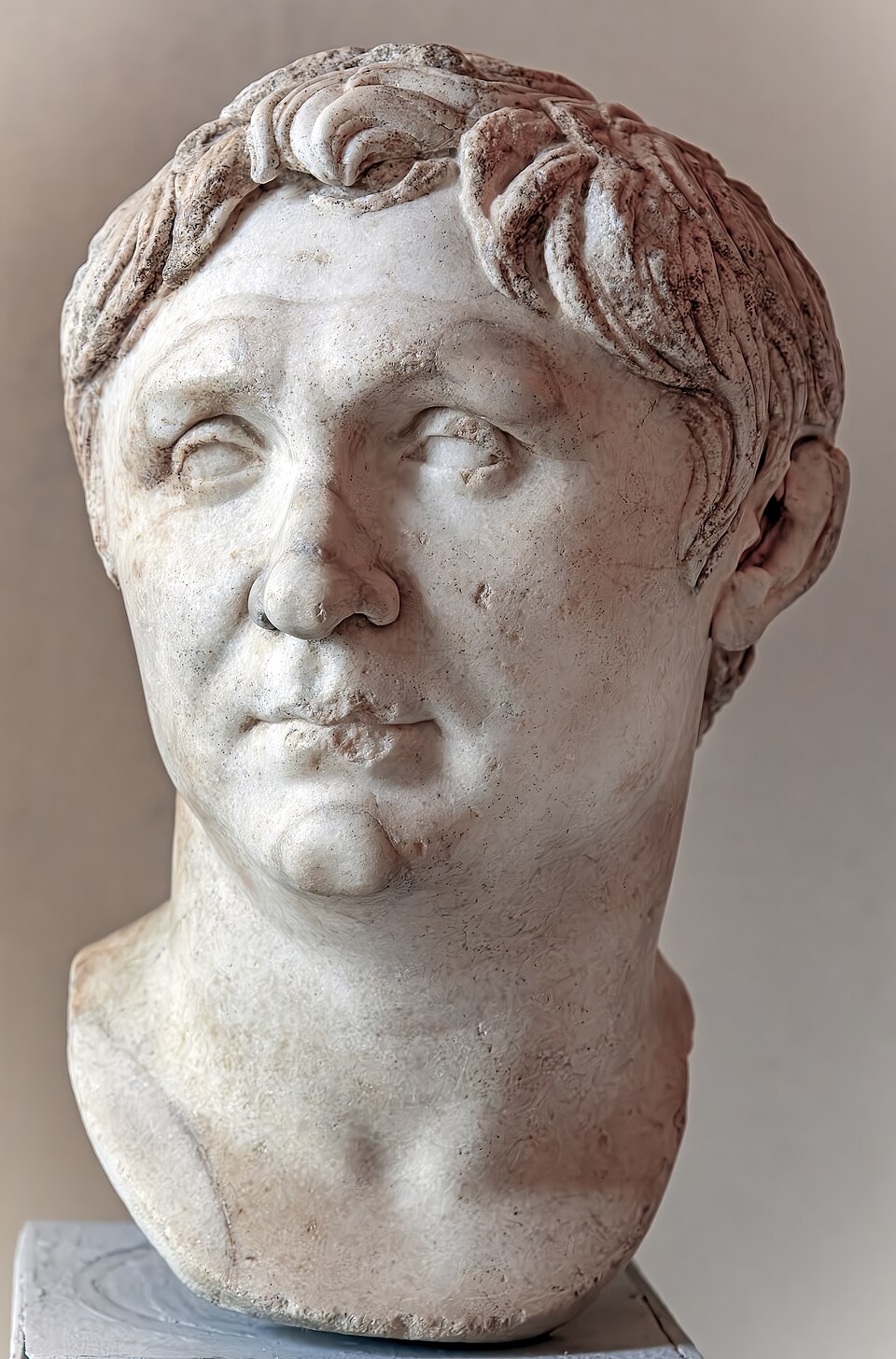
Broughton: Pompey and Crassus co-operated in restoring the powers of the tribunate of the plebs, and in reviving the censorship (a, see below, Censors), but were personally estranged and only reconciled publicly with difficulty (b). Pompey gave extensive votive games (c), and Crassus a huge banquet to the people (d). Both refused provincial commands (e).
Sources (6)
-
Broughton, MRR2
- CIL 12.2.901-903, datable also in 55 B.C.; Cic. Verr. 2.3.123; Div. 2.22. Sall. Cat. 38.1; Plut. Pomp. 22-23; Crass. 12; Apophth. Pomp. 6; Gell. 14.7.1; Chr. 354 (Magno et Grasso); Fast. Hyd. (Pompeio et Crasso), so also Chr. Pasc.; Cassiod.; on Pompey, Cic. Verr. 2.3.203; Val. Max. 8.15.8. See Degrassi 131, 486f.
- (a) Cic. Div. in Caec. 8; Verr. 1.41-46; 2.5.175; Leg. 3.22 and 26; Corn. in Ascon. 76 C. Leg. Agr. 2.36; Sall. Cat. 38,1; Hist. 3.48.23 M; Caes. BC 1.7.2-4; Liv. Per. 97; Vell. 2.30.4; Tac. Ann. 3.27; Suet. Iul. 5; Plut. Pomp. 22.3; App. BC 1.121; 2.29; Dio 36.38.2; 38.30.3; Ps.-Ascon. 189, and 220 Stangl; Schol. Gron. 340 Stangl;
- (b) Sall. Hist. 4.51 M; Suet. M. 19.2; Plut. Crass. 12.2-3; Pomp. 23.1-2; App. BC 1.121
- (c) Cic. Verr. 1.31; Ps.-Ascon. 217 Stangl
- (d) Plut. Crass. 12.3; Comp. Crass. and Nic. 1.4
- (e) Plut. Pomp. 23.3-4; and on Pompey, Vell. 2.31.1; Zonar. 10.2
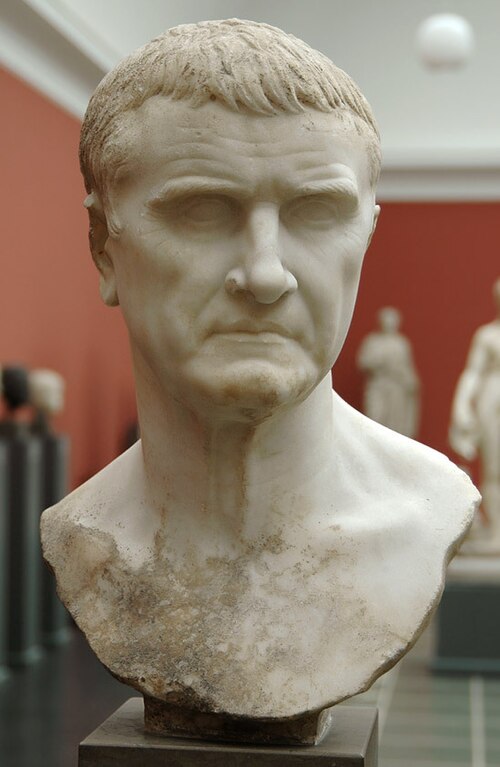
Broughton: Pompey and Crassus co-operated in restoring the powers of the tribunate of the plebs, and in reviving the censorship (a, see below, Censors), but were personally estranged and only reconciled publicly with difficulty (b). Pompey gave extensive votive games (c), and Crassus a huge banquet to the people (d). Both refused provincial commands (e).
Sources (6)
-
Broughton, MRR2
- CIL 12.2.901-903, datable also in 55 B.C.; Cic. Verr. 2.3.123; Div. 2.22. Sall. Cat. 38.1; Plut. Pomp. 22-23; Crass. 12; Apophth. Pomp. 6; Gell. 14.7.1; Chr. 354 (Magno et Grasso); Fast. Hyd. (Pompeio et Crasso), so also Chr. Pasc.; Cassiod.; on Pompey, Cic. Verr. 2.3.203; Val. Max. 8.15.8. See Degrassi 131, 486f.
- (a) Cic. Div. in Caec. 8; Verr. 1.41-46; 2.5.175; Leg. 3.22 and 26; Corn. in Ascon. 76 C. Leg. Agr. 2.36; Sall. Cat. 38,1; Hist. 3.48.23 M; Caes. BC 1.7.2-4; Liv. Per. 97; Vell. 2.30.4; Tac. Ann. 3.27; Suet. Iul. 5; Plut. Pomp. 22.3; App. BC 1.121; 2.29; Dio 36.38.2; 38.30.3; Ps.-Ascon. 189, and 220 Stangl; Schol. Gron. 340 Stangl;
- (b) Sall. Hist. 4.51 M; Suet. M. 19.2; Plut. Crass. 12.2-3; Pomp. 23.1-2; App. BC 1.121
- (c) Cic. Verr. 1.31; Ps.-Ascon. 217 Stangl
- (d) Plut. Crass. 12.3; Comp. Crass. and Nic. 1.4
- (e) Plut. Pomp. 23.3-4; and on Pompey, Vell. 2.31.1; Zonar. 10.2
Praetors
Broughton: Presided at the trial of Verres (b).
Sources (1)
-
Broughton, MRR2
- (b) Cic. Verr. 1.4 and 29 and 41 and 51-52; 2.1.30, and 5.76 and 163; Ps.-Ascon. 186, 220 Stangl; Schol. Gron. 330, 332 Stangl
MT: No further comments in MRR2
Sources (1)
-
Broughton, MRR2
- See 69, Promagistrates.
Broughton: In the latter part of the year he carried a law to reconstitute the juries in three equal groups, consisting, respectively, of senators, knights, and tribuni aerarii (a).
Sources (1)
-
Broughton, MRR2
- (a) Cic. Phil. 1.20; Corn., in Ascon. 67 C; In Clod. et Cur., and Schol. Bob. 91 Stangl; Liv. Per. 97, with praenomen M.; Vell. 2.32.3; Ascon. 17 C; Plut. Pomp. 22.3; Tac. Ann. 11.22; Schol. Bob. 94, and 97 Stangl; Ps.-Ascon. 189, and 206 Stangl; Schol. Gron. 328 Stangl; cf. Cic. Div. in Caec. 8; Verr. 1.38-39 and 44-46; 2.2.174, and 3.223, and 5.177; Cluent. 130; Att. 1.16.3
Broughton: The latest year possible under the Cornelian law
Sources (1)
-
Broughton, MRR2
- Cic. Pis. 2.
MT: No further comments in MRR2
Sources (1)
-
Broughton, MRR2
- See 69, Promagistrates
Broughton: Probably Pr. Urbanus, since official letters from the Propraetor Metellus in Sicily to Consuls and Quaestors included one to him.
Sources (1)
-
Broughton, MRR2
- Cic. Verr. 2.3.123
Aediles
Broughton: The latest probable date, since Silanus held the office after Hortensius (in75; Cic.), and was a candidate for the consulship of 64 (a).
Sources (1)
-
Broughton, MRR2
- (a) Cic. Att. 1. 1. 2
Career-overlap (4) Magistrates with the closest career overlap; red font indicates family member
C. Calpurnius Piso (): 70 BCE (Praetor) , 67 BCE (Consul)
C. Papirius Carbo (pr. 62) (): 67 BCE (Tribune of the Plebs) , 62 BCE (Praetor)
C. Vergilius Balbus (): 70 BCE (Quaestor) , 62 BCE (Praetor)
M. Acilius Glabrio (cos. 67) (): 70 BCE (Praetor) , 67 BCE (Consul)
Quaestors
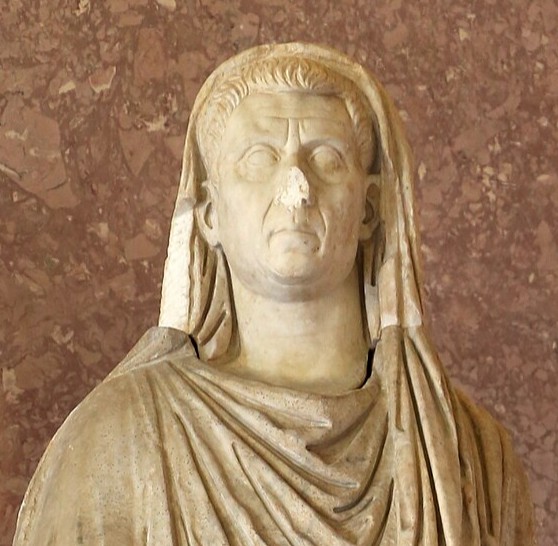
MT: No further comments in MRR2
Sources (1)
-
Broughton, MRR2
- Cic. Pis. 2.
Career-overlap (5) Magistrates with the closest career overlap; red font indicates family member
A. Gabinius (): 61 BCE (Praetor) , 58 BCE (Consul)
C. Octavius (): 64 BCE (Aedile) , 61 BCE (Praetor)
L. Domitius Ahenobarbus (cos. 54) (): 61 BCE (Aedile) , 58 BCE (Praetor)
M. Plaetorius Cestianus (): 70 BCE (Quaestor) , 64 BCE (Praetor)
M. Valerius Messalla Niger (cos. 61) (): 64 BCE (Praetor) , 61 BCE (Consul)
Broughton: Quaestor before he prosecuted Fonteius in 69 (a).
Sources (1)
-
Broughton, MRR2
- (a) Cic. Font. 1
Career-overlap (5) Magistrates with the closest career overlap; red font indicates family member
P. Servilius Globulus (): 67 BCE (Tribune of the Plebs) , 64 BCE (Praetor)
C. Marcius Figulus (): 67 BCE (Praetor) , 64 BCE (Consul)
L. Calpurnius Piso Caesoninus (cos. 58) (): 70 BCE (Quaestor) , 64 BCE (Aedile)
Broughton: Quaestor before 69 (a).
Sources (1)
-
Broughton, MRR2
- (a) mentioned in Cic. Font. 1
Broughton: Cic. Brut. 263-264, quaestorius, in age contemporary with Visellius Varro (see 73, Addendum).
Sources (1)
-
Broughton, MRR2
- Cic. Brut. 263-264
Broughton: See 69, Promagistrates.
Sources (1)
- MRR2
Career-overlap (5) Magistrates with the closest career overlap; red font indicates family member
C. Julius Caesar (): 65 BCE (Aedile) , 62 BCE (Praetor)
M. Calpurnius Bibulus (): 65 BCE (Aedile) , 62 BCE (Praetor)
Q. Tullius Cicero (): 65 BCE (Aedile) , 62 BCE (Praetor)
D. Junius Silanus (): 70 BCE (Aedile) , 62 BCE (Consul)
L. Licinius Murena (cos. 62) (): 65 BCE (Praetor) , 62 BCE (Consul)
Tribune of the Plebs
Broughton: Carried, with Caesar's support, a law to restore citizenship to followers of Lepidus who had fled to Sertorius (a). Possibly the author of a Lex Plotia Agraria (b; but see 89, Tribunes of the Plebs; Niccolini, FTP 436), and also of the Lex Plautia de vi (c).
Different dates have been suggested for the law of Plautius by Mommsen (77), Rotondi (73), Niccolini (69), E. Meyer, Denter, and Kübler (70): see FOR 3.25, note 4, where discussions are cited. The decisive points are: first, it must be placed in or after Caesar's military tribunate (71) and before his quaestorship (69; Suet. Iul. 5); second, it cannot be placed in the same year as the Lex Antonia de Termessensibus, when all the Tribunes are known; and third, as a tribunician bill it should probably follow the restoration of the powers of the Tribunes in 70. The Lex Antonia is excluded from 71 and 69 by the names of known Tribunes, and should probably be later than 70 in any case. The conditions of the problem are best met by dating the Lex Plautia in 70, the Lex Antonia in 68, while Caesar's military tribunate has been dated on other grounds to 71 and his quaestorship to 69 (see L. R. Taylor, CPh 36 [1941] 121, note 32).
Sources (3)
-
Broughton, MRR2
- (a) Suet. Iul. 5; Gell. 13.3.5; Dio 44.47.4; cf. FOR 3.25, and 112
- (b) Cic. Att. 1.18.6
- (c) Cic. Cael. 70; Mil. 35; Har. Resp. 15; Fam. 8.8.1; QF 2.3.5; Att. 2.24.4; Sall. Cat. 31.4; Ps.-Sall. In Cic. 2.3; Ascon. 55 C; Quintil. Inst. Or. 9.3.56; Dig. 41.3.33.2; Ind. 2.6.2; Schol. Bob. 84 Stangl; see Niccolini, FTP 252f.